How to organise and store a lapel-pin collection
A lapel-pin collection becomes difficult to use when fronts, posts and removable backs are kept in one loose box. A simple catalogue and a storage place for each complete pin make it easier to choose one, notice a missing fastening and protect different finishes from contact.
In this guide
Make an inventory before reorganising
Clear a table, place a soft clean cloth on it and work with one pin at a time. Photograph the front and reverse, then record the subject, stated material or finish, fastening type and any removable part. A phone note or spreadsheet is enough; the important detail is that each record matches one numbered storage space.
Do not identify material from colour alone. Pewter, gold-plated metal and a gold-coloured finish are different descriptions. Use the wording on the individual product page, and leave the material field blank when it cannot be verified.
If you are adding to the collection, the live lapel pins collection groups current designs by themes such as animals, professions, sport and heritage. Recording the theme as well as the fastening makes a large collection easier to search without opening every pouch.
Sort by fastening first
Separate long stick pins, short posts with clutches, badge-style clasps and other constructions before arranging by colour or subject. Each type needs a different depth and a different way to protect the point. The existing guide to lapel-pin materials and fastenings explains what to check on the reverse before you choose a storage method.
Close every clasp that is designed to close. Put a removable clutch or cap back on its own post. When a back no longer grips securely, mark the pin for attention instead of returning it to the ready-to-wear group.
Choose storage that protects the whole pin
Individual pouches
A pouch keeps one complete pin together and helps prevent its face rubbing against another. It also works well for pins with an irregular outline. Write the inventory number on a tag attached to the pouch rather than on the pin or its backing.
Compartment trays
A shallow tray gives quick visual access when each compartment holds one pin or one clearly matched set. Check that the lid clears the tallest point and that closing it does not press on a stick pin, raised motif or clasp.
Display boards
A board can make part of the collection visible, but the surface must accept the specific fastening without bending it or leaving the exposed point unprotected at the rear. Keep spare backs and certificates in labelled pockets linked to the same inventory number.
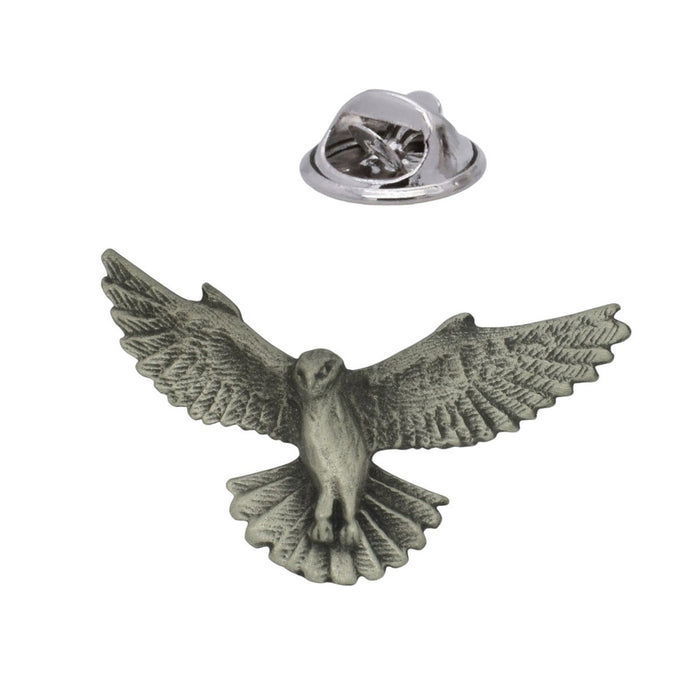
The current Kestrel English Made Pewter Lapel Pin is listed at £6.99 with an English-pewter face, pin backing and included velvet pouch; a gift-box upgrade is also offered. Its pouch provides a ready-made individual space, while the product description supplies the material and fastening details to record in the inventory.
Label spaces, not loose pieces
Use a short code such as LP-001, LP-002 and LP-003. Put the code on the pouch, tray compartment or box label, then use the same code on the photograph and written record. This avoids attaching adhesive labels to a finish or trying to write on a tiny clutch.
Useful record fields include:
- front and reverse photographs;
- design or subject;
- stated material and finish;
- fastening type;
- included pouch, box or spare part;
- the storage location;
- the last date the fastening was checked.
For themed collections, add one searchable word such as bird, golf, profession or Welsh. Keep the physical storage order simple and let the inventory handle overlapping themes.
Use a return-to-place routine
- Remove the pin over a clear surface and collect every detachable part.
- Check the post, point, clutch or clasp before putting it away.
- Follow the item’s own care instructions. Do not apply one cleaner to a mixed collection.
- Return the complete pin to its numbered space immediately.
- Update the record when a back, pouch or box is replaced.
Keep pins away from loose keys, coins and other hard objects. Store the collection in a dry place and separate pieces when their surfaces could touch. Before wearing a pin that has been stored for a long time, inspect the fastening again.
A practical rotation for a large collection
Keep frequently worn pins in the easiest-to-reach tray and archive less-used pieces in labelled pouches or boxes. Review one numbered section at a time rather than emptying the entire collection. A small “return” space is useful for pins worn during the week, provided each one goes back to its permanent location before another group is brought out.
Frequently asked questions
Should lapel pins be stored on the jacket?
Remove them before storing or cleaning the garment. Keeping the pin in its own space protects the fastening and avoids leaving it attached to fabric for long periods.
How do I stop removable backs becoming mixed up?
Give each complete pin one compartment or pouch and return the back to that pin immediately after use. Use one inventory number for the whole assembly.
Can different metal finishes share a compartment?
Separate them so hard edges and raised surfaces cannot rub together. Follow the care instructions for each stated material or finish.
Related gift inspiration
Explore these designs from our current range. Check each product page for its details and personalisation options.